A landmark with a working history
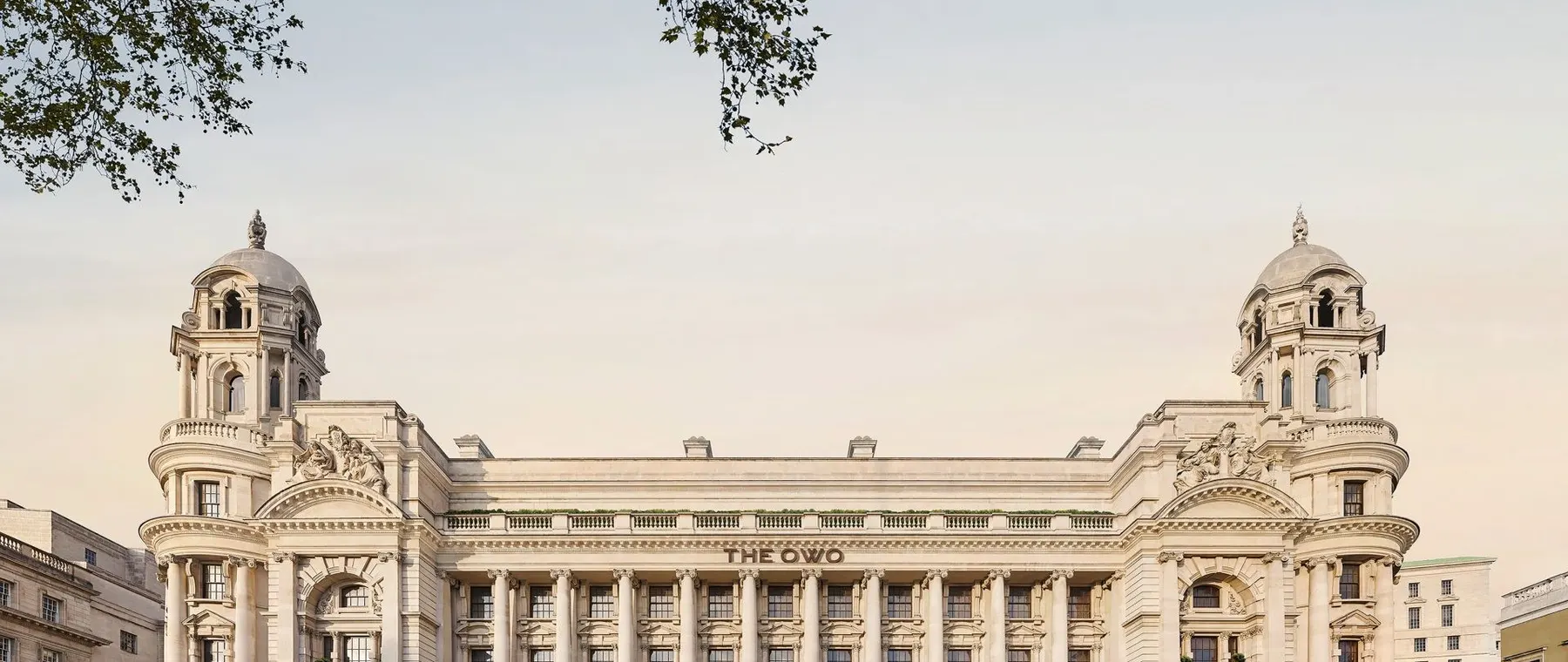
Raffles London at The OWO occupies one of Whitehall's most recognisable historic buildings, the former Old War Office. Opened in the early twentieth century for British government and military administration, the structure has been restored and adapted for hospitality. Its history is substantial enough that the surroundings contribute to the experience before a guest even reaches the room.
The restored setting is distinctive because it brings private luxury into an area more often associated with state ceremony and institutions. Public rooms, corridors and decorative details preserve a sense of architectural seriousness, while the hotel provides contemporary service behind the historic shell. That contrast distinguishes it from many of London's newer luxury addresses.
The hotel's published description refers to 120 rooms and suites, complemented by private residences within the wider development. Travellers should distinguish hotel accommodation from independently owned residences when comparing facilities and booking options. A grand building may accommodate several forms of private life without offering all of them to every guest.
For yacht travellers passing through London between cruises, the Whitehall setting makes a useful contrast to ports and marinas. It is a city base, not a waterfront boarding point, so onward movement to an aircraft or yacht requires realistic time allowances. The appeal is cultural and historical rather than immediate access to the sea.
The character of a historic suite
A stay in a converted landmark rewards attention to the individual room rather than reliance on star ratings and generic category names. Ceiling heights, window positions, views and internal layouts may vary across a historic building. Guests considering a longer stay should ask what the specific suite offers for relaxing, working and receiving visitors.
Some travellers will value the building's formal grandeur, while others will prefer a more understated room with a convenient layout. Neither choice is automatically superior. The most satisfying accommodation is the one that fits the party's daily habits rather than the one with the most elaborate description.
Raffles London provides a butler-service tradition that can help organise the practical details of a demanding itinerary. Preferences about newspapers, timing, luggage, dining and privacy are best communicated in advance. Reliable personal service is particularly helpful when a group is arriving at different times or combining leisure with business appointments.
For families and multigenerational groups, room proximity and accessibility deserve early attention. Historic buildings can contain routes that are less straightforward than those in purpose-built hotels. The team should confirm any connecting rooms, lift access and movement between key facilities before the reservation is regarded as complete.
A dining destination in its own right
The OWO's dining programme encompasses multiple restaurants and bars, giving guests an unusually varied choice without requiring a journey across the city. It includes experiences associated with recognised culinary figures, from formal dining to more relaxed venues. That flexibility is useful when different evenings call for different levels of ceremony.
A hotel with this many dining spaces should not be approached as a list to complete. One memorable dinner chosen for personal taste may be more rewarding than trying several restaurants in rapid succession. Guests should verify menus, opening hours and whether their preferred room is accessible to hotel residents and outside visitors.
The property's historic setting also lends itself to private occasions, although the formality of the venue should suit the event. A quiet dinner for two and a larger celebration have different service requirements. Any special arrangements should be agreed directly with the hotel, including the exact location and practical conditions.
London's restaurant scene extends far beyond one address, and a sensible itinerary should allow guests to explore particular neighbourhoods or longstanding favourites. A generous hotel dining programme creates freedom, not an obligation to stay inside. That balance is especially valuable to travellers who want the comfort of a dependable base alongside the city's variety.
Wellness and the city beyond
The hotel promotes a Guerlain Spa and substantial wellbeing facilities, offering a restorative counterpoint to busy days around London. Guests who have travelled through several time zones may appreciate a deliberately quiet morning before cultural appointments begin. Time devoted to recovery is often a better investment than adding another event to the schedule.
Whitehall places visitors near major civic and cultural institutions, yet journeys across London can still be slow during peak periods. Advance ticketing and a realistic walking or driving plan help keep the day relaxed. A location in the centre does not remove the need to check opening arrangements and special security restrictions.
Those interested in the building's military and administrative past can use the stay as a starting point for exploring London's wider history. The history should be approached with curiosity and accuracy rather than reduced to decorative anecdotes. Guided visits to suitable museums or public landmarks can add context to what guests see inside The OWO.
Raffles London succeeds when the restored building and the city engage in a conversation. Its grand spaces are inviting, but the deeper pleasure is returning to them after encountering London outside. For a luxury traveller who values provenance and service, that pairing offers something more enduring than a fashionable address alone.