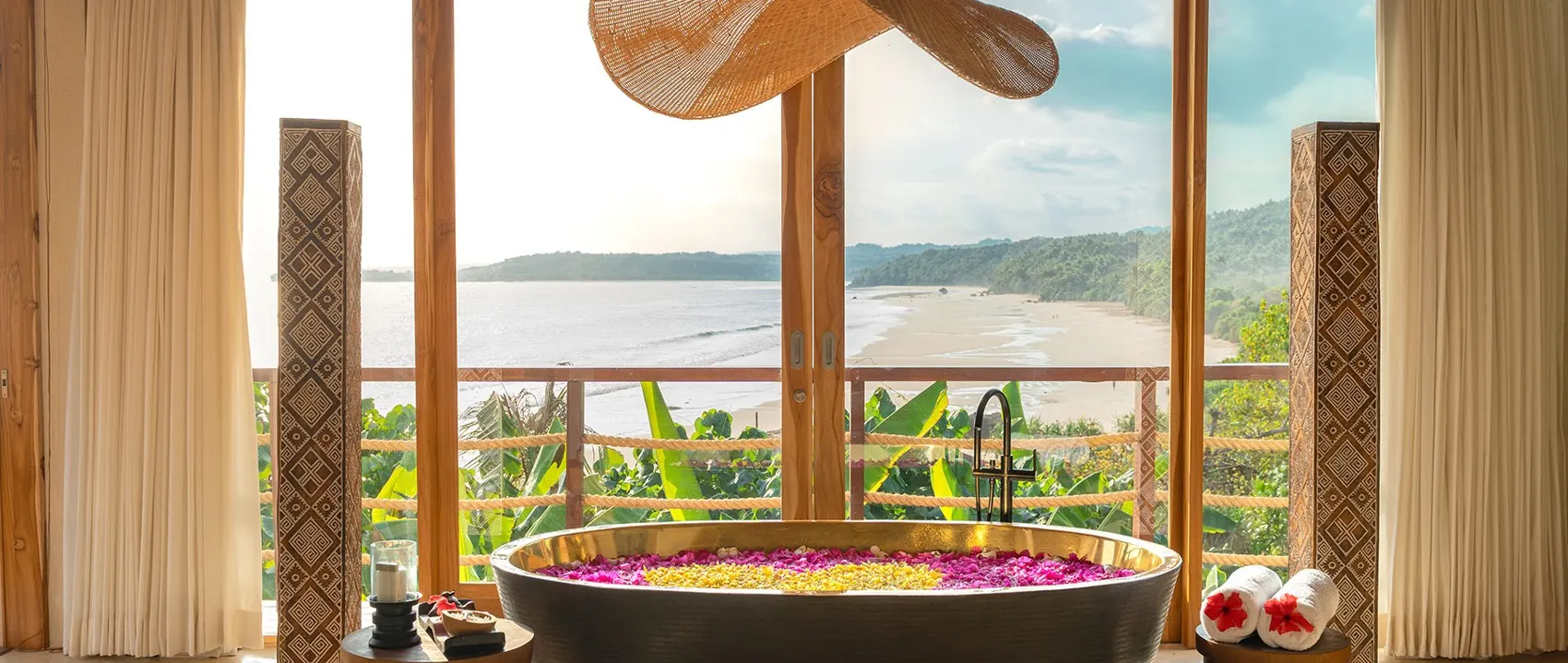
A resort shaped by its coastline
NIHI Sumba is built around a wild section of Indonesian coastline rather than a conventional manicured holiday strip. The resort describes 31 villas and estates facing the two-and-a-half-kilometre length of Nihiwatu Beach, with spaces extending from intimate couples' retreats to expansive family compounds. The variety matters because a guest's experience depends strongly on elevation, proximity to the sea and the amount of private outdoor space provided by the chosen residence.
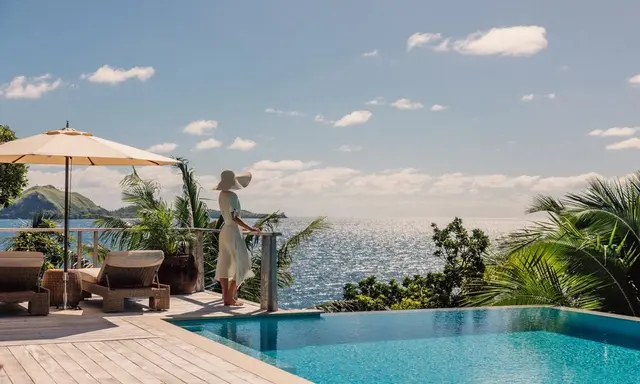
The Indian Ocean dominates the outlook, often with large surf visible in the distance. NIHI's website repeatedly references the well-known wave at Occy's Left, which is part of the location's identity. That sight can be spectacular even for non-surfers, though visitors should not assume that an exposed beach is suitable for casual swimming at all times. Local conditions and the advice of the resort's experienced staff should guide activity near the water.
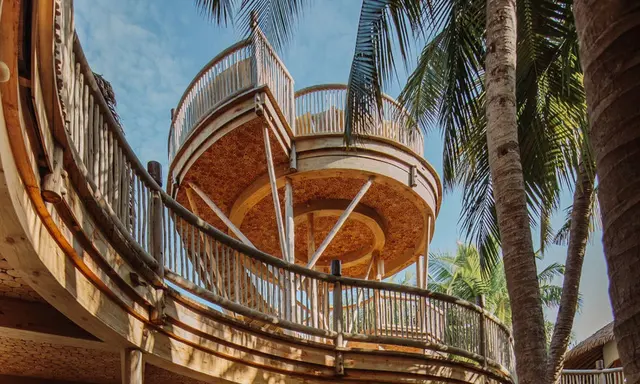
Design at NIHI is intended to feel connected to Sumba rather than interchangeable with another tropical luxury property. Many villas sit amid greenery, with outdoor terraces, pools and views arranged to make the natural setting part of everyday life. The architecture varies across the estate, so there is no single standard NIHI room. Prospective guests should study the exact villa category and its position rather than use the resort name as a complete description.
Accommodation from one bedroom to a private estate
The official villa portfolio includes one-bedroom retreats, two-bedroom arrangements and larger estates for several generations. Raja Mandaka, Marangga and other named accommodations have distinct settings and capacities, from hillside lookouts to sites close to the beachfront. Families should check sleeping arrangements against the number and age of guests, especially where a villa includes bedrooms on different levels or outdoor paths between buildings.
Some residences offer immediate beach access, while others sit higher above the shoreline for panoramic views and additional seclusion. Neither position is intrinsically more luxurious. A couple may prefer a private elevated terrace and broad ocean outlook, while a family with active children might value easier access to the main resort facilities. The distance between a villa and restaurants or activities can be more important than the view in a single photograph.
Private pools are a notable part of the portfolio, but their size, depth and exposure vary. Ask for current plans and clear photographs when pool use is central to the stay. The same applies to accessibility: an elevated tropical estate may include stairs and paths that are beautiful but challenging for some visitors. Matching layout to mobility and comfort is a practical step that can prevent disappointment in an otherwise extraordinary location.
A different rhythm of island living
The appeal of Sumba is not simply that it offers warm weather. The landscape has a distinctive scale and a strong sense of place, encouraging days built around sea views, walking, cultural experiences and time at the villa. A resort of this type suits guests who are comfortable with a slower rhythm, where one carefully chosen activity can be enough for an entire day. The sense of being away from a city is part of the holiday's value.
NIHI highlights ocean-facing terraces and quiet personal spaces where guests can watch the surf or the sunset without participating in a large organised event. Those moments can feel especially valuable to travellers who spend much of the year in crowded urban environments. There is no need to fill every afternoon with a formal programme. A generous residence often serves as the most memorable setting for conversation, reading and unhurried meals.
Nonetheless, an island stay should involve thoughtful engagement with the surrounding community and environment. Travellers who choose locally guided experiences can gain a better understanding of Sumba without treating everyday village life as a spectacle. Respect for local customs and sensitivity when taking photographs are important. The resort's privacy should coexist with an awareness that the coast is part of a living place, not an empty backdrop.
Planning a stay on a remote coast
Travel to Sumba takes more coordination than a stay near a major international airport. Guests should confirm the transfer process, domestic flight requirements and the time needed to reach the resort with staff who understand the current routes. Seasonal weather can affect the comfort of travel and the activities available on arrival. Planning a generous connection reduces the risk that a delayed flight consumes a substantial part of a short holiday.
Accommodation selection is the second major decision. A luxurious four-bedroom estate is not necessarily the best option for two people seeking maximum intimacy, just as a striking one-bedroom villa may not work for a family requiring connected sleeping areas. Ask how meals, private experiences and any specialist activities are provided from the chosen location. Transparent arrangements are more valuable than vague promises of a completely bespoke stay.
NIHI Sumba stands apart through the encounter between elegant private accommodation and an unusually rugged coastline. Its best features are not only fixtures inside a villa, but the broader sense of surf, forest and light changing across the day. For travellers willing to manage the additional journey carefully, it offers a memorable form of luxury that leaves the natural setting in control of the atmosphere.