For collectors, the appeal of a piece often lies in the thinking behind its materials and design rather than the headline alone. Piaget GLOW brings three distinct gold treatments into a diamond-set ring capsule, from engraved Decor Palace surfaces to waves and scale-like textures.
The official announcement centres on piaget glow turns three gold textures into a new diamond ring capsule. For Luxury Yacht Guide readers, the emphasis is on what this adds to travel, time ashore and an individually planned experience.
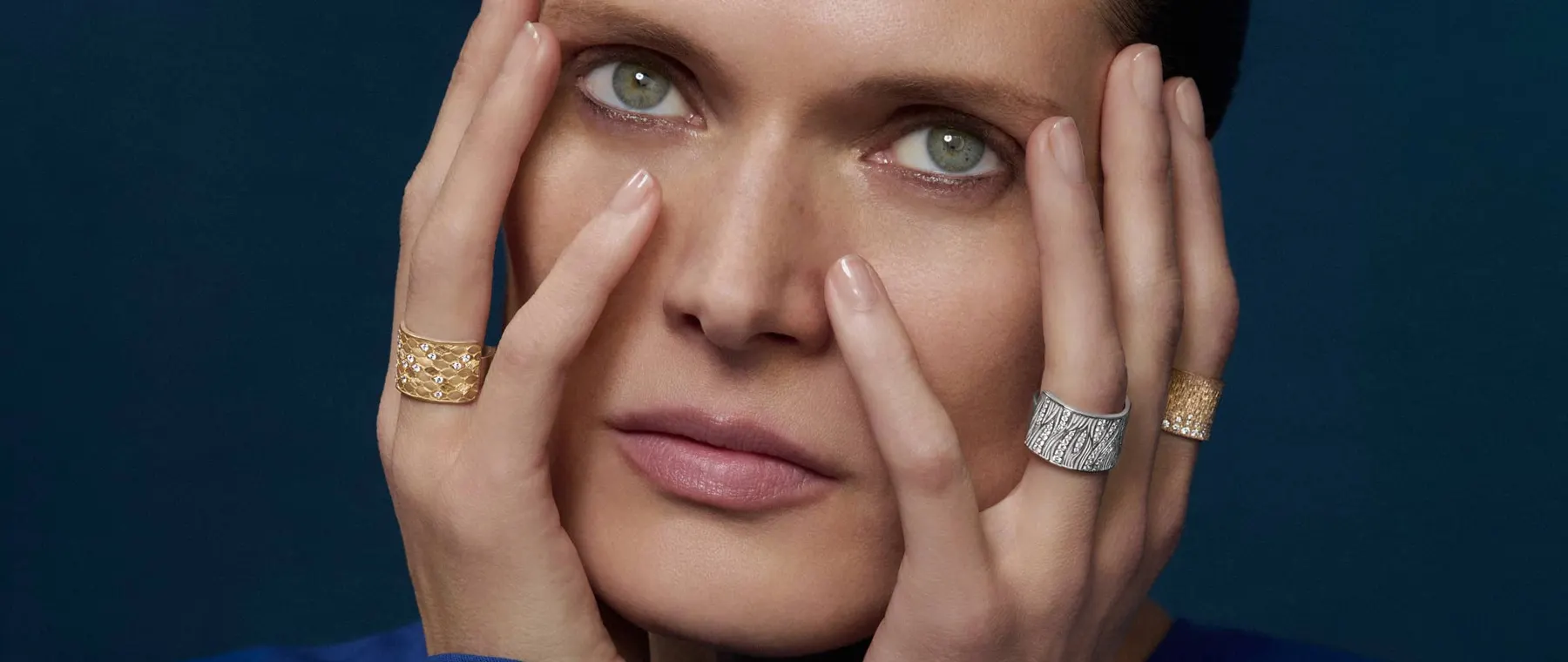
Piaget has introduced GLOW, a jewellery capsule that treats gold less as a neutral setting for diamonds and more as a surface to be sculpted, engraved and patterned. The collection brings together three different ring ideas, each using texture and movement to change the way light travels across the metal and stones.
Decor Palace turns engraving into a signature
The rose-gold Decor Palace ring uses one of Piaget's most recognisable house techniques, engraving the metal so that its surface catches light in irregular flashes rather than behaving like polished gold. Diamonds are integrated into that textured landscape, allowing the stones and the engraved metal to work together instead of competing for attention.
Wavy Pattern breaks the circle
A second design uses asymmetric, undulating curves to make the ring appear less static on the hand. Diamond placement follows the changing geometry, giving the piece a sense of motion that contrasts with the more architectural character of the Decor Palace treatment.
Golden Scales makes yellow gold deliberately tactile
The third expression uses yellow gold shaped into a scale-like pattern with diamond accents. The texture gives the ring a stronger object quality, closer to a piece of miniature sculpture than a smooth conventional band, while remaining recognisably within Piaget's language of bold gold jewellery.
High jewellery ideas move into a wearable capsule
GLOW is interesting because it translates the techniques and visual confidence associated with larger high-jewellery pieces into rings that can be worn more regularly. For collectors who move between watches, jewellery, fashion and design, the appeal lies in the craftsmanship being visible at arm's length rather than hidden inside a rarefied one-off object.
A collector should distinguish the announced design from other versions in the same family. Reference, materials, edition size and current availability all merit direct confirmation with the maker.
An official campaign photograph documents the piece but does not guarantee its appearance in every market. The manufacturer's specification remains the reference for the particular item.