Hilton has published a new guide to destination wedding weekends, bringing together five resort settings across Hawaii, Mexico and Texas where the celebration can extend beyond a single ceremony. The official 24 November 2026 feature highlights La Cantera Resort & Spa near San Antonio, Grand Wailea on Maui, Hilton Los Cabos, Conrad Punta de Mita and Conrad Tulum Riviera Maya. It describes a range of beach, garden, resort and ballroom venues, with opportunities for guests to share several days of dining, wellness and exploration. For Luxury Yacht Guide readers who travel internationally for private family events, the development is a useful look at how hotels are adapting to celebrations built around a whole itinerary. The guide is the operator's curated selection, however, not an independent ranking of the five best wedding destinations or evidence that every advertised space is available on a specific future date.
Weddings are becoming multi-day travel experiences
A destination ceremony usually brings together people who have made a substantial journey, so the celebration often includes activities before and after the central event. A welcome dinner, small-group excursion or informal farewell breakfast can give guests more time to meet without the pressure of one crowded schedule. Hilton's feature explicitly places such extended experiences alongside the ceremony itself. This does not mean every couple must plan an elaborate programme or spend more than intended. Good design begins with the needs of the families and the travel distances involved. A smaller number of thoughtful events can be more enjoyable than an expensive list of activities. The central question is how to make the gathering feel personal and manageable.
La Cantera provides a Texas Hill Country setting
La Cantera Resort & Spa, a Signia Hilton resort, occupies a substantial property in Texas Hill Country near San Antonio. Hilton identifies the new Calera venue as one option for exchanging vows, supported by other indoor and outdoor spaces for receptions and related events. The hotel also describes several dining venues, pools, golf and Loma de Vida Spa & Wellness as attractions for a longer gathering. These facilities give visitors alternatives between wedding appointments, although their actual use may require reservations and separate payments. The resort's countryside setting differs markedly from the tropical coastlines elsewhere in Hilton's selection, illustrating why a destination wedding is partly a choice of landscape and atmosphere, not just the appearance of a banquet room.
Maui's Grand Wailea emphasises the Pacific coast
Grand Wailea, A Waldorf Astoria Resort, is presented with its Seaside Chapel and oceanfront celebration possibilities. The operator connects these settings with tropical gardens, Pacific views and the wider resort's leisure facilities. Such an arrangement may appeal to couples who want a recognisably Hawaiian setting without holding the entire occasion directly on open sand. Cultural references should be handled respectfully, and any requested ceremony elements should be discussed with local professionals rather than improvised from a promotional photograph. The authentic chapel image accompanying this feature comes from Hilton's first-party resort gallery. It is an illustration of the venue, not proof of an individual couple's wedding or the current availability of a particular date.
Los Cabos offers another Pacific choice
Hilton Los Cabos provides a different setting on Mexico's Baja California peninsula, where the desert landscape meets the sea. The official guide includes the resort among its five destinations but does not imply that every ceremony uses the same beach or a fixed number of guests. Coastline, sun exposure, wind and access can shape how an outdoor celebration is organised. A location that feels private in a promotional photograph may have practical rules about timing and venue boundaries. Couples should check the actual site plan, weather contingency options and whether a reception will require additional equipment or permits. The attraction of Los Cabos is the combination of marine scenery and regional character, with each celebration still dependent on careful local planning.
Conrad Punta de Mita connects events with local cuisine
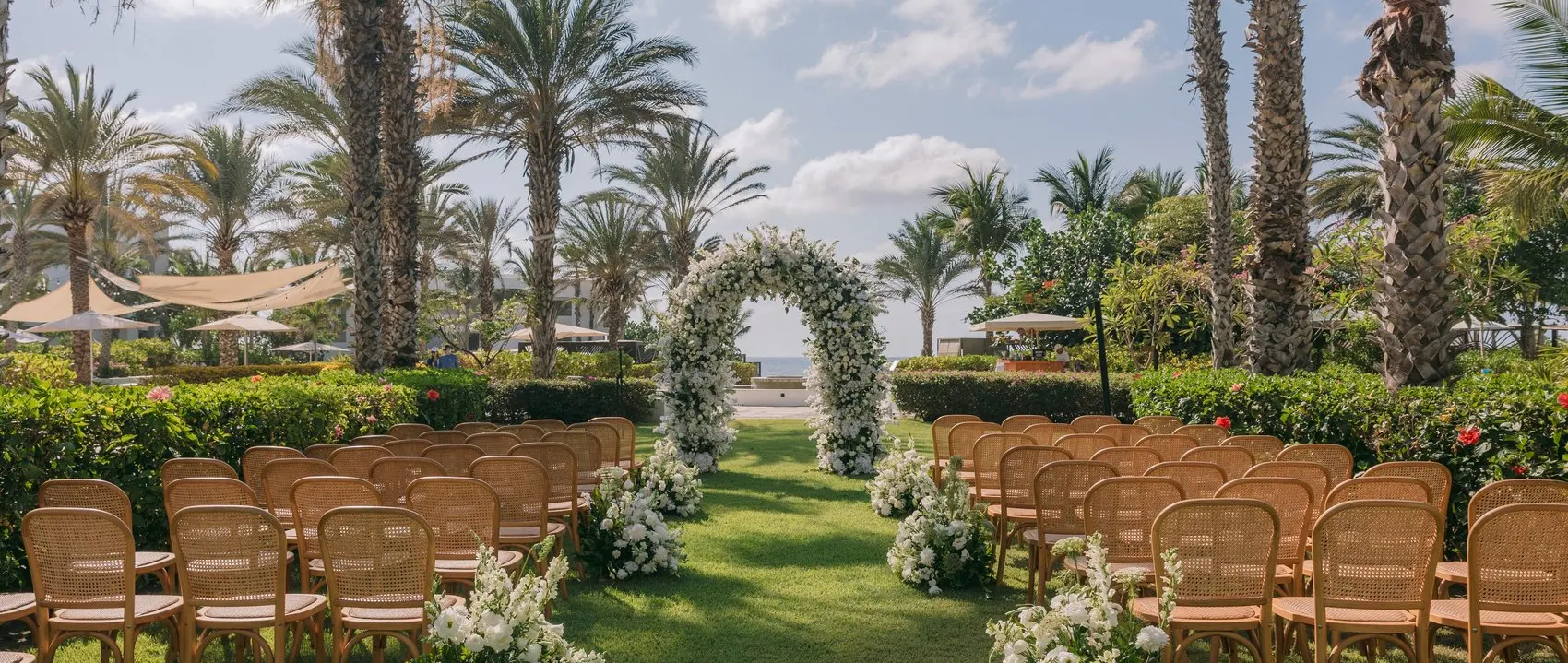
On Riviera Nayarit's Pacific shore, Conrad Punta de Mita offers options named by Hilton including Mezquite Beach, Haramara Lawn and the Tukipa Ballroom. This range creates room for different ceremony sizes and for a sensible indoor alternative when the weather is not suitable. The operator also highlights menus drawing on Mexican regional ingredients, along with spa, dining and outdoor activities. The accompanying official image depicts a genuine outdoor wedding setup at this hotel rather than a generic staged beach from another destination. That does not mean the exact chairs or decorations are automatically included in an event package. Couples should establish the design, suppliers, capacity and catering arrangements for the date and venue under consideration.
The Marietas Islands add a travel dimension
The Hilton guide mentions nearby boat excursions to the Marietas Islands as one potential experience for guests staying at Conrad Punta de Mita. That connection makes the property especially interesting to people who enjoy boating and marine scenery. Such excursions must be treated separately from the wedding contract: availability can depend on sea conditions, local environmental restrictions, tour operator capacity and any required permissions. Guests should avoid assuming that all areas of a protected destination are always accessible. A thoughtfully organised small-group trip can add variety to a wedding weekend, but the priority should be responsible operation, appropriate safety procedures and respect for the natural environment.
Conrad Tulum Riviera Maya provides a Caribbean alternative
Conrad Tulum Riviera Maya, described as an all-inclusive resort in the Hilton feature, offers ceremony and reception possibilities on Mexico's Caribbean coast. The operator emphasises tropical surroundings, oceanfront areas and adaptable indoor and outdoor venues for events ranging from intimate gatherings to larger celebrations. This setting contrasts with the Pacific resorts because the landscape and wider travel experience are different. Couples should examine what 'all-inclusive' covers for their guests and what remains an additional wedding charge. A resort package may include accommodation and ordinary dining while still pricing event production separately. The precise terms of any offer should be established in writing, not inferred from the hotel's general category.
The guest experience needs as much attention as the ceremony
An effective destination wedding should account for what guests do between organised events. Some may want spa treatments or time by the pool, while others may prefer cultural excursions or a quiet room to recover from travel. The five resorts offer a range of choices, but the availability of a specific programme can vary with the season and operating schedule. Children, older relatives and guests with mobility requirements may also need different arrangements. The Hilton feature presents possibilities rather than a guarantee of uniform access. Couples and planners should communicate essential details early and avoid booking a programme that assumes every guest has identical energy, interests or physical abilities.
A wedding budget needs to include the full journey
The cost of a celebration abroad extends beyond the ceremony space and menu. Travel, accommodation, airport transfers, photography, flowers, clothing, weather contingencies and pre-event appointments can all have an impact. Some guests may be able to extend their trip, while others face limited leave or a significant flight. This is why a sensible couple might schedule fewer mandatory activities and offer optional experiences instead. The official Hilton feature does not publish a universal all-in price, nor could one figure fairly describe five different destinations and guest lists. A useful budget should distinguish contractual obligations from choices that can be changed if priorities shift. Planning with transparency is a practical form of hospitality to one's guests.
Local climate can shape ceremony design
Outdoor weddings look effortless in polished resort photography, but heat, rain, strong sun and wind can affect comfort, food service, sound and decoration. A late-afternoon ceremony on one coast may have different challenges from an indoor event in Texas or a chapel setting in Maui. The right approach is to ask the chosen venue for seasonal information, a backup plan and an explanation of who decides whether an outdoor function can proceed. No destination is guaranteed flawless weather. A couple should consider lighting, accessibility and transport alongside aesthetic preferences, keeping critical decisions in the hands of the venue and licensed suppliers rather than relying on distant forecasts months before the date.
Cultural sensitivity matters in international celebrations
Destination weddings often take place within communities whose customs and landscapes are central to the travel experience. Couples may wish to incorporate local food, music or craftsmanship, but the result should be developed with people who understand those traditions rather than use them as interchangeable decoration. Hilton references destination-inspired menus and experiences, which can provide opportunities for respectful engagement. A resort's marketing language is not by itself proof of a particular partnership or local sourcing arrangement. Asking thoughtful questions about suppliers and cultural meaning can improve the event and reduce the risk of staging a generic performance divorced from its setting.
The resort operator is not an independent judge
Hilton's list includes properties from its own portfolio, so it should be understood as a branded editorial guide rather than a neutral comparison across all possible resorts in the Americas and Hawaii. That distinction does not invalidate the practical information about venues and facilities. It simply places the recommendations in context. Couples considering a major financial commitment should review independent location information, inspect event spaces where possible and compare written proposals from several venues. References to Hilton's traveller research in the feature are also company-reported findings, not a measure of what every couple wants. Readers deserve this transparency when a destination piece mixes genuine travel ideas with a company's own promotions.
Five settings, several different versions of luxury
The original Hilton November guide confirms the five featured resorts and the types of experiences the operator suggests for extended celebrations. Texas offers open countryside; Maui has a chapel and Pacific gardens; Los Cabos and Punta de Mita bring different Mexican coastal settings; and Tulum provides a Caribbean alternative. No single formula will fit every family. For Luxury Yacht Guide readers, the story is about choosing a destination thoughtfully, balancing ceremony design with the comfort of people who have travelled to share it. The official photography is properly attributed, while specific availability and event terms remain matters for direct consultation with the resorts.
Explore related Luxury Yacht Guide lifestyle reporting
- Jumeirah Lake Como Plans Spring 2027 Debut With 40 Waterfront Suites
- Monaco Yacht Show 2027 VIP Experience: An Owner’s Guide
- Sofitel Rio Ipanema Prepares 1 December Beachfront Opening
- Villa Cose Outlines a 23-Suite Colmar Spa Retreat for Spring 2027
Primary reporting and image credit
Primary manufacturer and organiser source(s): https://stories.hilton.com/weddings-romance/destination-weddings-with-hilton. © Hilton / Conrad Punta de Mita. Genuine resort wedding setting photograph featured in the official November 2026 destination weddings guide. Image is used only for correctly attributed factual editorial coverage and never represented as open-licence stock photography.