Life aboard is more than engine time
The Greenline 42 offers an alternative way to think about a modest-sized luxury cruising yacht: not simply how quickly it can travel, but how comfortable it is once it stops. Its 13.5-metre design builds on the brand's long-running interest in onboard electrical energy and practical liveability.
Owners who spend afternoons at anchor need refrigeration, lighting, device charging and sometimes air conditioning. Those loads can dominate the experience of a quiet bay even when the main propulsion engines are shut down.
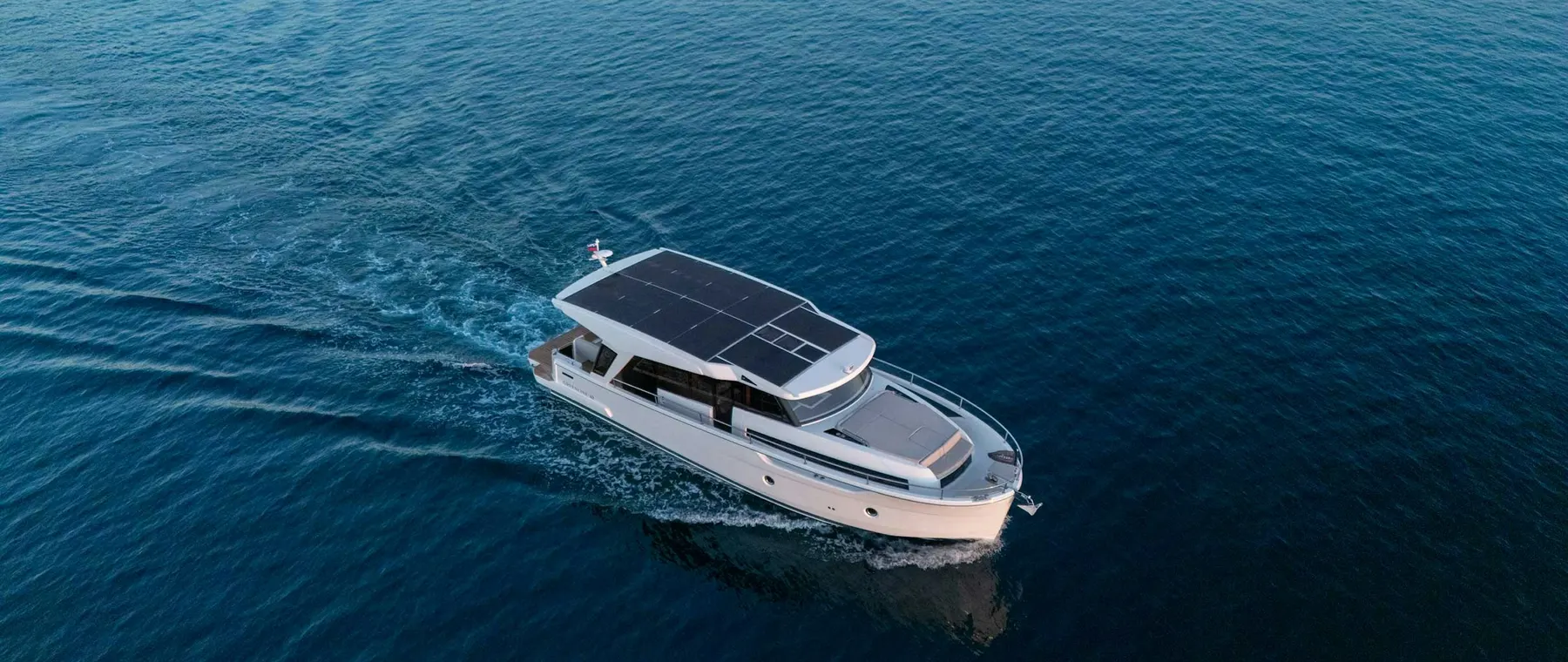
Solar panels support hotel loads
The builder uses solar generation and battery storage to help supply onboard systems while the yacht is away from shore power. The appeal is fewer reasons to run a generator purely to support domestic equipment.
Solar energy is variable. Weather, seasonal sun angle, shading and the owner's actual electricity consumption determine how much it can contribute. Buyers should examine the fitted battery capacity and energy budget rather than assume that every appliance can run indefinitely from the sun.
An optional hybrid propulsion route
Greenline also offers hybrid-drive configurations alongside diesel power, providing the possibility of lower-speed electric movement under suitable conditions. This may be useful for quiet harbour approaches and short repositioning trips.
Electric operating speed and duration are governed by battery state, vessel loading and conditions, and hybrid machinery introduces its own service and training needs. Buyers should request a practical demonstration and a detailed description of charging behaviour.
Two cabins and connected social areas
The model includes two cabins with additional saloon sleeping options depending on its final arrangement. A cockpit linked to the main living space is intended to improve the flow between dining, cooking and outdoor seating.
Overnight comfort depends less on a maximum berth count than on storage, sound insulation and whether passengers can move around without disturbing one another. The layout should be tested with the number of guests who will normally be aboard.
Deployable outdoor spaces
Folding side areas are designed to create additional room beside the cockpit when the boat is stationary. They can be attractive for swimming, sunbathing or simply enjoying views close to the water.
Owners need to understand structural and operational limits, including situations in which the platforms must remain closed. The design is best assessed during a dealer demonstration rather than treated as an unrestricted extension of the deck.
A better way to evaluate energy claims
The most useful questions concern typical daily power demand, battery recharge time, backup generation and how service support works in the intended cruising region. Even a highly efficient system must be planned around cloudy days and unusually high guest demand.
For Mediterranean cruising, solar-supported systems may improve comfort at anchor, but meaningful comparisons require measured consumption and a complete equipment specification. The choice is about matching technology to real habits rather than relying on the promise of complete energy independence.