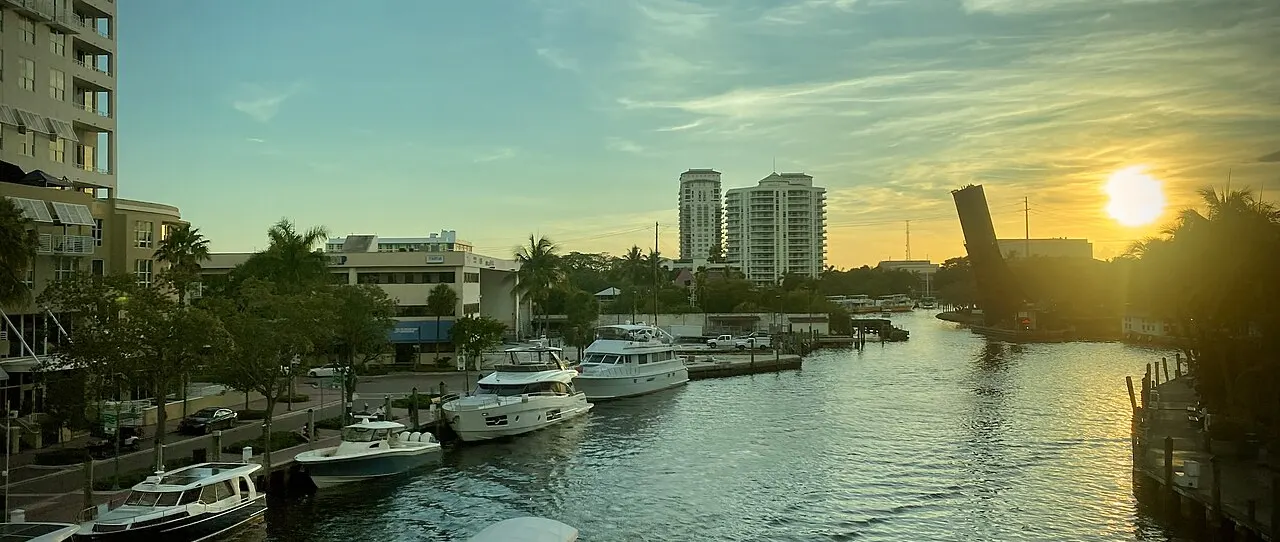
A city designed around the water
Fort Lauderdale is often introduced through its international boat show, yet it makes a rewarding luxury-yacht destination in its own right. The city describes a network of canals, rivers and Intracoastal Waterway routes that connect neighbourhoods, marinas, parks and dining districts. A yacht owner arriving outside show week can discover a different rhythm, moving between a confirmed berth, the beach and Las Olas Boulevard without feeling obliged to attend a trade exhibition. For a privately operated yacht of 12–23.99 metres, the main practical decision is which marina fits the boat and the planned stay. The harbour is attractive precisely because it is active, so bridge openings, commercial traffic and local rules deserve attention.
Las Olas Marina makes a strong first impression
The redeveloped Las Olas Marina sits close to the beach and offers an ambitious combination of deep-water berthing and shore amenities. Its operator, Suntex, advertises reservations, a public waterfront promenade, dining and facilities for owners and crew. The City of Fort Lauderdale documented the marina's opening in October 2024 and described slips capable of accommodating very large yachts. However, headline maximum berth length does not reveal whether a smaller luxury vessel can be accepted on a particular date or at a suitable rate. Confirm the exact slip allocation, power supply, beam, draft and cancellation terms with the marina before arranging guests' travel.
Look beyond the most prominent name
Fort Lauderdale has a range of yacht facilities serving different owners. Some are large-yacht centres, others are oriented towards smaller marina stays or operational support. A good approach is to compare at least two real options using the same vessel details and the same requested dates. Distance to the open ocean, bridge restrictions, access to the beach and availability of repairs may matter more than the glamour of a marina's social-media imagery. A berth that is ideal for a weekend of restaurants may not be the best place to undertake maintenance. The city's waterfront variety gives owners choices, provided those choices are evaluated honestly.
The Intracoastal is not simply a scenic road
Fort Lauderdale's waterways are part of daily life, with private boats, commercial activity and public transport interacting in a relatively confined network. The city's Waterways programme describes ongoing work around water quality, facilities, enforcement and habitat protection. For a visiting skipper, this means navigation deserves careful attention even when the scenery feels relaxed. Bridge timings, wake restrictions, shoals and traffic must be checked using official information rather than a travel article. The purpose of visiting by yacht is to enjoy the waterfront, not to turn a pleasure passage into a hurried test of manoeuvring among unfamiliar constraints.
Las Olas Boulevard on foot
Once safely berthed, Las Olas Boulevard offers an easy shift from time afloat to city life. Fort Lauderdale's official visitor information highlights shops, restaurants and cultural attractions along this central thoroughfare. Some owners will enjoy browsing boutiques, while others may prefer a relaxed meal and a walk between galleries or shaded streets. The trick is to leave time for the unexpected rather than booking every hour. Restaurants and shops change, and opening times should be checked near the visit. One of the privileges of cruising is being able to return to the yacht when the city feels busy, then step ashore again when the mood changes.
The beach is still part of the experience
Fort Lauderdale's oceanfront promenade is one of the clearest pleasures of a stay near the barrier island. The city describes the landscaped beach area, with a distinctive wave wall and walking route, as a central attraction. After several days of watching the sea from a cockpit, it can be surprisingly refreshing simply to walk along the sand. A yacht holiday should include that freedom to enjoy the coast from more than one perspective. Swimming conditions, weather and beach notices require local checks, but a morning shoreline walk is flexible and requires no elaborate itinerary. This is where a practical marina location becomes especially valuable.
Use the public waterways without moving the yacht
Fort Lauderdale's municipal LauderGO! Water Trolley operates along the New River, while a separate Water Taxi network connects other waterfront neighbourhoods. Official city and tourism information provide the current routes, stops and general schedules. These services can make an entertaining day out of the city without asking the yacht's skipper to manage another trip through bridges and traffic. Travellers should distinguish the municipal trolley from paid water-taxi services and verify times and fares before setting out. The pleasure is seeing waterfront homes, public spaces and busy docks as a passenger, leaving the yacht secure at its berth.
A riverfront afternoon
The New River and Riverwalk area offer a different atmosphere from the ocean beach. Here the city feels more urban, with parks, cultural stops and bridges connecting the waterfront. The LauderGO! route lists designated stops and cautions that bridge operations may delay service. For yacht guests, that is an invitation to keep plans relaxed rather than schedule a tight restaurant reservation immediately after a water-trolley journey. Riverwalk can be explored in short sections, which works well for mixed-age groups. A day that combines a few hours ashore with an evening on the yacht gives everyone a sense of place without exhausting them.
Heritage behind the modern skyline
Fort Lauderdale's story is not limited to glass towers and boatyards. The regional tourism authority points visitors towards historic sites such as the Stranahan House and the city's earlier waterfront history. A heritage visit provides context for the network of waterways that now defines the destination. It also helps guests understand how a modern marine hub developed over time. Before choosing a museum or guided tour, confirm availability and admission arrangements from the operator. A city with an international yacht industry can still be experienced through quiet local history, and that contrast often makes a visit feel more memorable than an evening spent only among other boats.
Dining on the water, responsibly
A waterfront meal is one of Fort Lauderdale's obvious pleasures, but selecting a venue should be driven by location, service and the people travelling with you. The city and regional tourism sites identify varied dining areas around Las Olas and the wider waterfront. Menus, reservations and dockside arrangements change, and arriving at a restaurant by private tender may not be permitted without advance agreement. The easiest option is often to leave the yacht in its secured berth and use road or public water transport. Good planning keeps the meal relaxed and avoids the awkwardness of assuming that any waterside deck is an available private landing point.
The marine-service advantage
Fort Lauderdale's large concentration of marine businesses can be helpful when a yacht needs supplies, inspection or planned maintenance. Yet the breadth of the local industry should not be mistaken for a guarantee that any specialist can attend immediately. Owners should identify technical issues before arrival, contact suitably qualified providers and ask their marina about access rules. A short maintenance appointment can be combined with sightseeing if scheduled properly; an unplanned repair can consume the whole stay. Shore power, water, pump-out and fuel arrangements also vary by marina. The most luxurious itinerary is often the one in which these practical matters have been dealt with quietly in advance.
Season and event timing
Fort Lauderdale's character changes sharply around major boat shows and other events. That activity can be exciting for enthusiasts, yet it may also increase demand for berths, restaurants and transport. Outside busy weeks, visitors may have more freedom to explore at a gentler pace. South Florida also has seasonal weather risks that should be considered in any long-term berth or cruising decision. There is no universally perfect date, because individual crews may prefer different combinations of social activity, tranquillity and weather. Checking the city's event calendar and the marina's current booking conditions is better than assuming the waterfront will always feel the same.
A simple short-stay rhythm
For a two-night stop, a sensible first day focuses on arrival, secure berthing and a short waterfront walk. The following day can begin at the beach, continue along Las Olas Boulevard and finish with an unhurried dinner. Guests who want a different perspective might substitute a Water Taxi excursion or an afternoon around Riverwalk. Longer visits allow museums, boatyards and coastal sightseeing without squeezing everything into one day. This suggested rhythm is deliberately flexible. The skipper's route, guest energy, local weather and marina arrangements should determine what actually happens rather than a printed timetable.
Fort Lauderdale beyond boat-show week
The city's appeal is that luxury yachting is woven into its daily geography. A visitor can wake in a marina, walk by the Atlantic, take public water transport and explore a busy cultural district before returning to the boat. Official municipal, marina and tourism sources support the practical features of this experience, while the editorial conclusion is personal: Fort Lauderdale is worth visiting for its own sake, not only as a venue for buying yachts. For a vessel of manageable size, careful berth selection unlocks a city that can be sophisticated, relaxed and genuinely enjoyable in the same stay.