Canyon Ranch Austin begins its first guest season
Canyon Ranch has scheduled 15 October 2026 as the start of guest arrivals at its new destination wellness resort in Spicewood, outside Austin. The 600-plus-acre property overlooking Lake Travis is intended as a retreat where guests can combine outdoor activity, health consultations, spa treatments and purpose-designed accommodation within a single estate. The company opened reservations earlier in the year, making the October milestone a significant expansion of its destination-resort portfolio.
The project's scale places it in a different category from a conventional city spa hotel. Canyon Ranch is seeking visitors willing to devote several days to personalised programmes rather than book a single treatment between sightseeing appointments. The opening date announced in June remains the published plan, although travellers should confirm operational availability and individual services for their selected arrival dates before booking.
A Lake Travis setting by Lake Flato
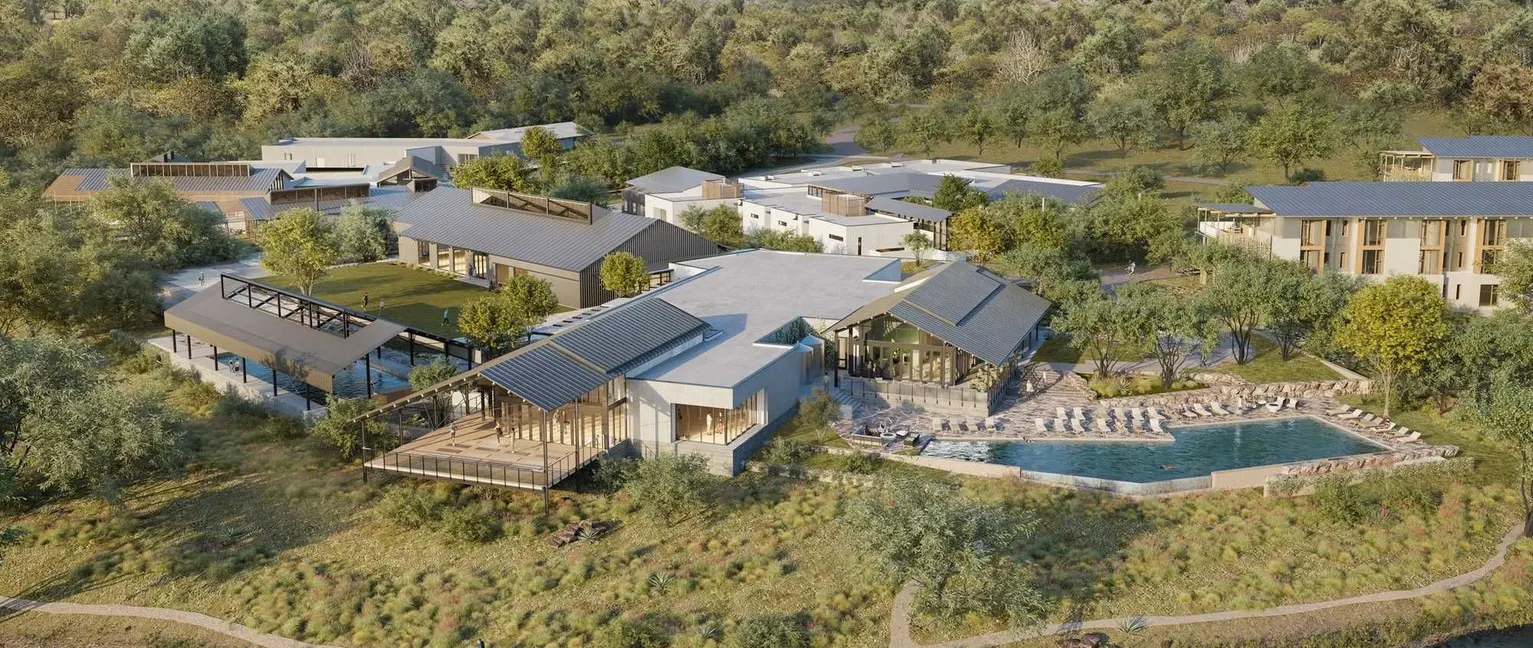
The resort occupies rolling Hill Country land around the shoreline of Lake Travis, approximately fifty-five minutes from central Austin according to the project's published travel guidance. Texas architecture practice Lake Flato designed the principal buildings, using a series of relatively low pavilions and outdoor spaces intended to respond to the local terrain. An aerial rendering illustrates landscaped paths, terraces and waterside outlooks rather than a single high-rise hotel block.
Location changes the character of a wellness trip. Guests can move between treatment facilities and open-air activities without leaving the campus, and those who prefer quieter stays may spend time simply exploring the surrounding landscape. The hotel is not a substitute for a medical facility offering every specialty, however, and travellers seeking particular clinical services should establish exactly what can be provided on site.
Texas's largest spa is central to the offer
Canyon Ranch describes a spa of approximately forty thousand square feet, with thirty-seven treatment rooms and facilities that include pools and wet experiences. The company positions the spa as a central gathering point for traditional relaxation services alongside more specialised therapies. The size creates room for several guests to receive different treatments at the same time, though actual appointment availability will depend on staffing and daily schedules.
The important consideration for a visitor is which services are included in a chosen package and which carry additional charges. Treatment durations, cancellation rules and suitability for individuals vary, especially where higher-intensity body therapies are involved. An impressive square-footage figure makes the facility distinctive, but a well-planned stay should also allow enough time between bookings to enjoy the resort's other offerings.
A dedicated centre for movement and recovery
The development also includes a twenty-seven-thousand-square-foot facility known as The Barn, planned for fitness, movement studios, a yoga deck, a training centre and recovery spaces. Canyon Ranch lists a wide daily activity schedule and guided movement sessions as part of its whole-person approach. Visitors can choose more active experiences or focus on flexibility and restoration, depending on their goals and physical capability.
A destination wellness programme is most useful when it is adapted to the individual rather than treated as a competition to attend every class. Guests should check how instructors assess experience levels and whether the resort can accommodate mobility or accessibility requirements. Recovery time can be as valuable as strenuous exercise, particularly during a short stay that also includes spa appointments and outdoor excursions.
Health and performance services
Canyon Ranch's plans include a health-and-performance centre of approximately twelve thousand square feet with medical and wellness professionals. The company has described consultation areas focused on preventive health, sleep, nutrition and physical performance, along with a women-focused wellness practice. This combination gives the property a stronger health orientation than a resort whose wellness offer consists solely of massages and a gym.
Any consultation should be evaluated on its own merits, including the practitioner's qualifications and what testing or follow-up is available. Travellers should not assume that every diagnostic service is part of an overnight rate. Where a health issue requires ongoing treatment, a destination stay should complement rather than replace care from an established clinician. The resort's appeal lies in coordinated experiences, not in a blanket promise of medical outcomes.
Outdoor activities beyond the treatment rooms
The Hill Country site provides hiking and biking routes across the ranch, access to its Lake Travis frontage and plans for equestrian activities, tennis, pickleball and padel. The public project information also describes swimming pools and garden areas. These facilities allow the programme to include leisure experiences that are closely tied to the landscape, which may appeal to companions who want different levels of activity during the same holiday.
Conditions outdoors will vary with the Texas season, and not every activity is equally appropriate in hot weather or following rain. Lake-based sports need to account for water levels, local regulations and supervised access. A guest planning a visit around one particular activity should verify whether it will be offered on the chosen dates. The wider setting makes variety possible without guaranteeing a full programme every day.
Dining shaped around the wellness brief
Canyon Ranch has announced a food-and-beverage programme overseen by culinary director Val M. Cantú, known for his work in fine dining. The property identifies Estella among its principal venues and envisages several dining experiences rather than a single all-purpose buffet. The objective is to make eating well part of a desirable holiday, without treating enjoyable cooking and nutrition as competing priorities.
Guests with allergies, medical diets or particular preferences should clarify arrangements before arrival. A personalised wellness programme may influence recommended meals, while other travellers may simply wish to experience the property's cuisine. The dining approach will be judged by consistency and flexibility once guests begin using it. Brand credentials set expectations, but what reaches the table depends on the day-to-day kitchen operation.
A new benchmark for destination wellness
The resort is one element of a larger Canyon Ranch Austin development that also includes a residential component. The company has described a Ranch Home Collection with architect-designed homes and resident access to resort services. For travellers, this mixed-use plan is relevant mainly because it suggests a long-term investment in facilities and expertise rather than a temporary seasonal retreat.
Canyon Ranch Austin's October arrival programme gives affluent travellers another option for structured wellness holidays in the United States, with a distinctive location and an unusually large spa. The case for booking should still be made through specific programmes, room details, practitioner availability and realistic personal goals. A thoughtfully planned itinerary can be rewarding without the need to fill every hour.