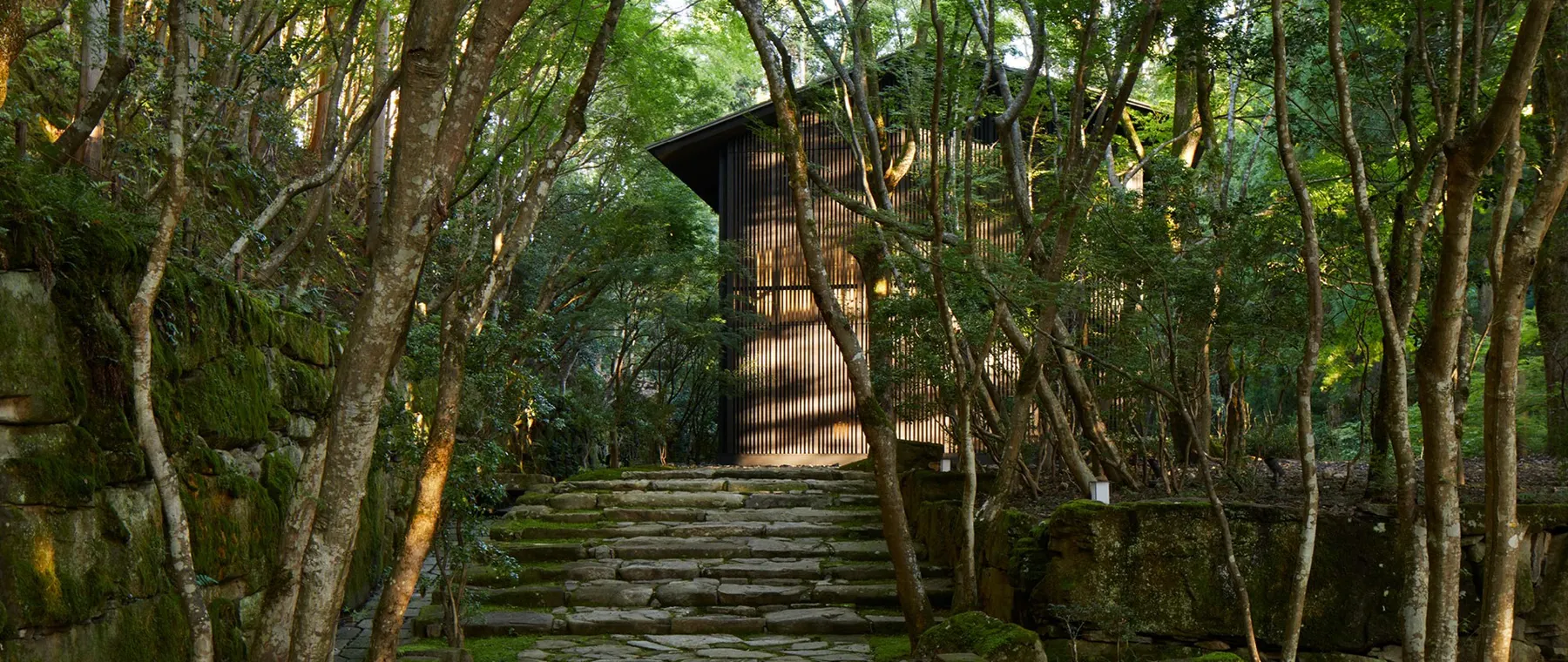
A hidden garden near a historic capital
Aman Kyoto occupies a forest setting in the foothills near the city’s historic temples, where moss-covered paths, trees and small garden spaces establish an atmosphere far removed from busy streets. The property is described as a secret garden and an interpretation of the traditional Japanese ryokan. For travellers who move frequently between yachts and major cities, that combination offers a compelling chance to pause without leaving Kyoto’s cultural richness behind.
The resort lies close to Kinkaku-ji, the celebrated Golden Pavilion, and provides access to a city with a remarkable concentration of UNESCO World Heritage sites. That proximity does not make every temple a private attraction or guarantee unrestricted admission. A considered visit respects working religious places, seasonal visitor pressure and the different expectations that apply to sightseeing, worship and photography.
Aman’s design emphasises the quiet space between buildings as much as the rooms themselves. Paths invite guests to notice filtered light, stone surfaces and changing foliage, especially at times of year when Kyoto’s gardens take on a different character. The surrounding trees are not merely a decorative screen; they make the act of walking back to one’s room a meaningful part of the stay.
Twenty-six rooms and a Japanese way of staying
Aman Kyoto describes twenty-six rooms, suites and pavilions, with interiors that use natural wood, expansive glazing and details inspired by the ryokan tradition. Even its smaller room categories begin at a generous sixty square metres. Such scale can feel particularly restful after a day of temple visits, although the size on a brochure is less important than the actual sleeping arrangement and garden outlook for the room selected.
For guests travelling as a family or with companions, the property offers larger pavilions, including the secluded Washigamine Pavilion. Aman lists a two-bedroom layout with a living room, dining space, kitchen area and a traditional tatami room within approximately 241 square metres. The difference between an individual room and a complete pavilion may be considerable, so a private itinerary should begin with a discussion of shared living needs.
The architectural language is intentionally restrained, creating a background for the landscape rather than competing with it. Natural surfaces and tatami floors deserve respectful use, and families should clarify sleeping arrangements before assuming that a Western-style extra bed will suit everyone. Accessibility also merits an early conversation, because forest paths and traditional-inspired spaces can be less straightforward than those in a large urban hotel.
Onsen bathing and Kyoto’s living culture
The resort’s onsen facilities are part of its appeal, drawing on Japan’s long tradition of mineral-rich hot-spring bathing. Aman Kyoto explicitly notes that it does not have a conventional gym or swimming pool, a useful distinction for anyone comparing it with a contemporary destination spa. Guests should ask about onsen etiquette, booking requirements and suitability for their individual circumstances before planning a series of treatments.
Aman’s cultural programme also introduces guests to tea ceremony and the preparation of matcha, with the Tea House located in the gardens. A bowl of tea can offer a deeper connection to the local rhythm than a crowded list of sightseeing appointments, particularly when a knowledgeable host explains the objects, gestures and seasonal sweets involved. Respectful participation matters more than claiming to have acquired an ancient skill in a single afternoon.
Kyoto’s wider crafts, gardens and religious institutions provide a wealth of possibilities, but choosing a small number of experiences usually produces a more meaningful visit. Guests interested in textiles, ceramics or Japanese art should communicate those interests before arrival so that any guide is appropriately matched. Many workshops are active places of work, where advance arrangements and photography permissions deserve careful attention.
Travel plans that protect the calm
Aman Kyoto is inland, so arrival from a yacht in Japan would require a separately arranged road or rail journey. Kyoto Station and the Kansai region’s airports offer possible onward connections, but travel time and transfer inclusions should be checked against the room category and booking. A vessel’s position in Osaka Bay or another coastal port does not determine a simple direct route to this wooded sanctuary.
The company advertises benefits such as breakfast, afternoon matcha, guided exploration of its garden and access to hot-spring facilities, with additional transport arrangements associated with certain pavilions. These benefits can vary by offer and date, so it is sensible to obtain a clear written list before booking. Spa appointments and private cultural experiences should be secured ahead when the city is busy with seasonal travel.
Aman Kyoto is most appealing to travellers who appreciate stillness, craftsmanship and a thoughtful introduction to Japanese culture. It makes no promise of beach access or resort-style watersports, and that is precisely why it works as a contrasting land-based interlude. Choose a room for its real layout, organise temple visits respectfully and allow the forest garden to dictate a gentler pace.
Original property information: https://www.aman.com/resorts/aman-kyoto. Readers should confirm current availability, transfer arrangements and individual inclusions with the property.